
Spilling Into the Valley
On cracks, callings, and how the small thing becomes everything

My train pulled into the station just as the late March afternoon sun began to bathe the hillside hometown of Saints Francis and Clare of Assisi and the burial place of recently canonized Carlo Acutis. I had attended Franciscan schools my entire life and had walked these streets before, yet life’s deepest awakenings have a way of rendering even the most familiar places entirely new.
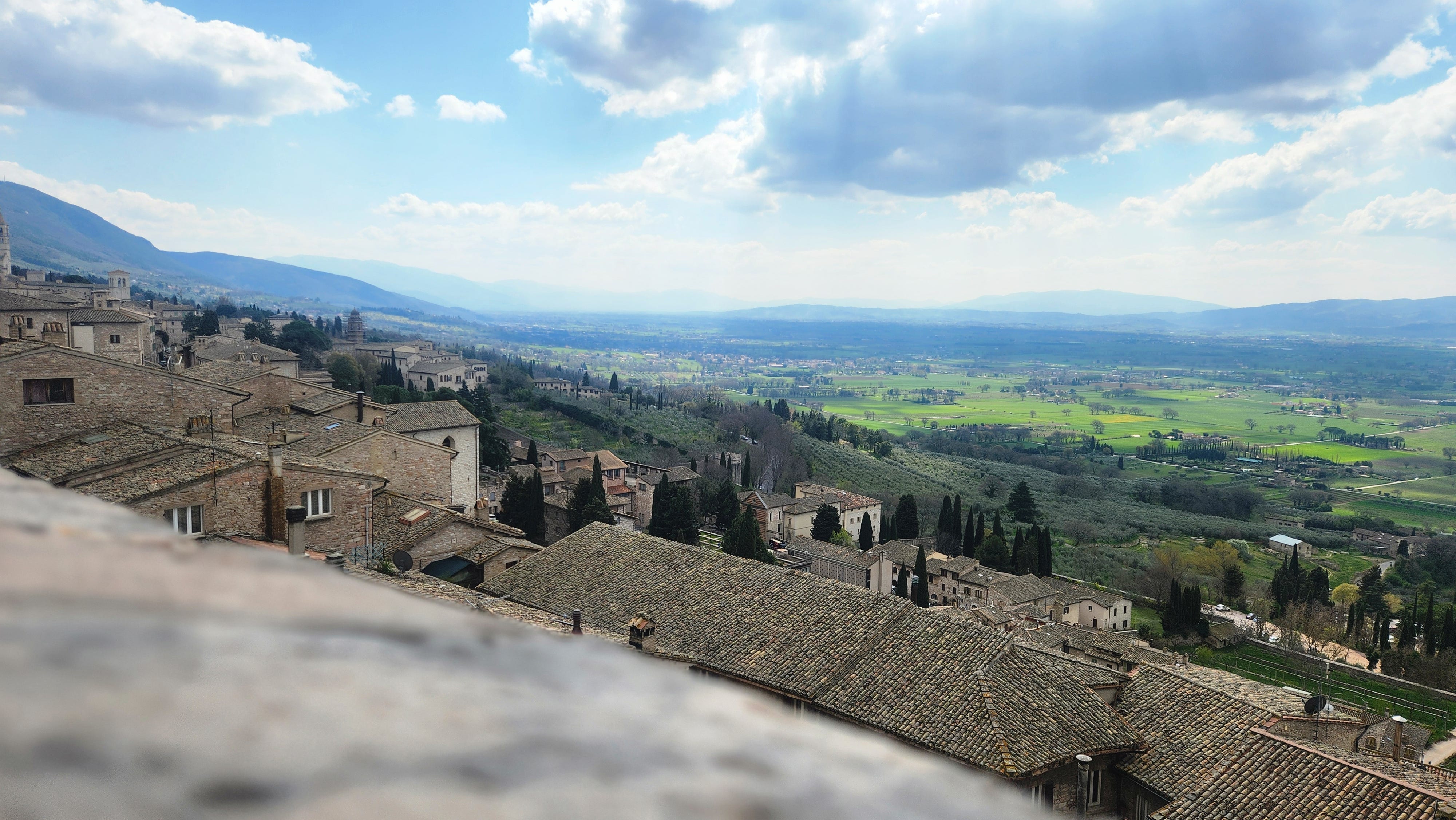
My arrival coincided with a unique, month-long celebration marking the eight-hundredth anniversary of Saint Francis’s passing. For this extremely rare window, his remains—normally hidden away—were on public display. I managed to secure the very last viewing slot on the very last day, before they would be sealed again for the foreseeable future. There was a quiet gravity to the timing; it felt less like a coincidence and more like an appointment.
Down in the cool, dim light of the lower basilica, I joined the slow-moving line of pilgrims, our footsteps shuffling toward the glass enclosure. When I was just a few meters away, an unexpected wave of emotion hit me, and tears began to fall. Reaching the glass, I rested my hand gently against its surface, struck by the delicate smallness of the skeletal frame that lay inside.
It was a startling, quiet realization: Francis was no giant. Physically, he was fragile—a small, great man whose true stature resided entirely elsewhere.
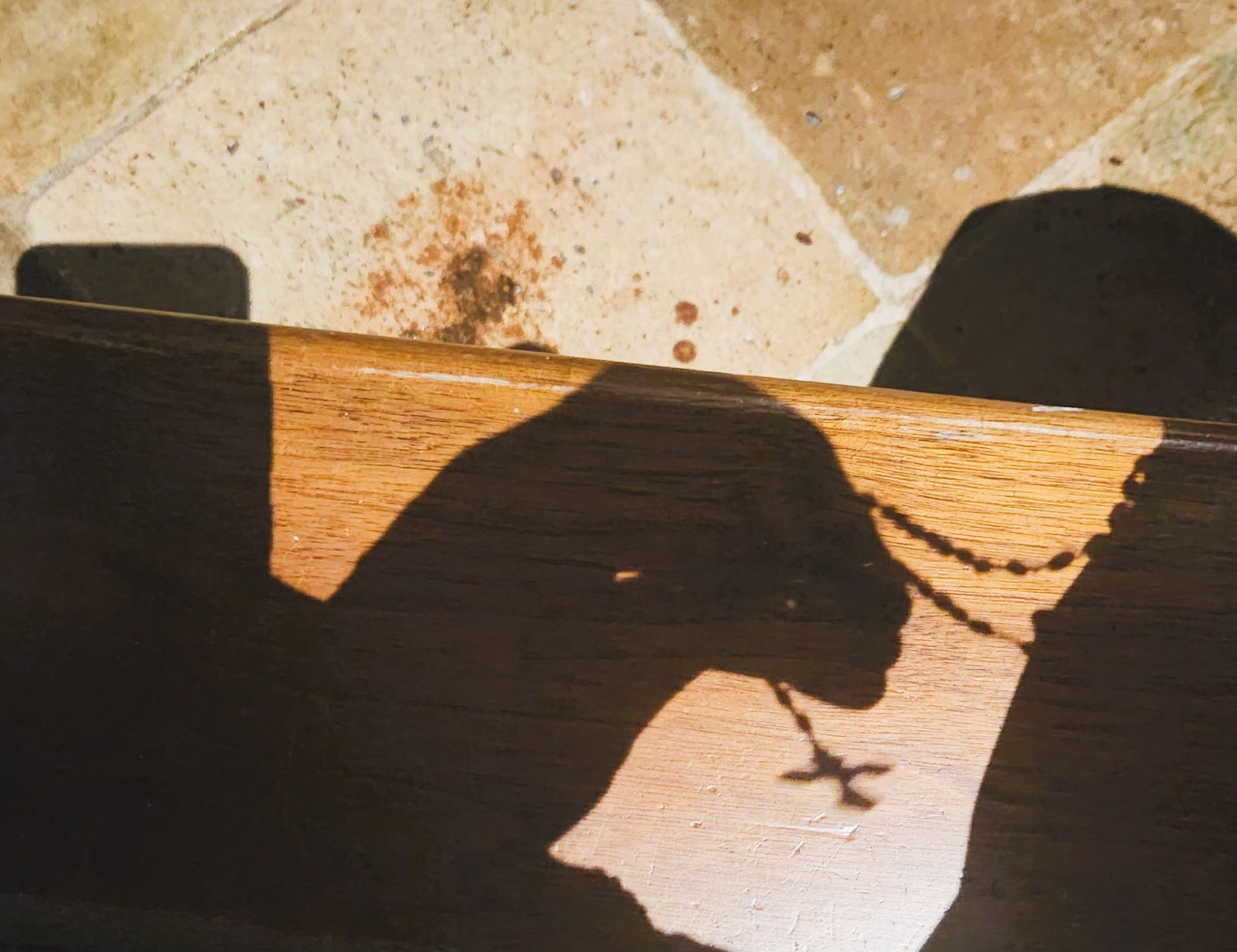
Over four days, what began as an excuse to escape Rome and hike the hills of Mount Subasio became something else entirely. Walking the same terrain Francis walked — from the upper hills to the lower valley, from the city center to the remote Hermitage — I began to trace the arc of a life I thought I already knew.
It was only here, moving through the landscape itself, that I began to understand how the tension of opposites Francis carried — wealth and poverty, revulsion and compassion, imprisonment and freedom, strength and weakness — was never an obstacle to his awakening. It was the murmuring beneath it.
Francis knew the lower valley of Assisi. He had ridden through it as a young merchant’s son, past the leper colonies clinging to its edges, turning his face away from the smell, the disfigurement, the unbearable proximity of suffering he had no category for. Then came Perugia — a military skirmish, a year of imprisonment, and an illness that nearly killed him. Something cracked open in that cell that wealth and ambition could not repair. He returned to Assisi changed, but not yet arrived. The change needed a direction. San Damiano gave him the voice. The lepers gave him the road. He rode back down into the valley — this time without turning away — and in that reversal, something was reordered that could never return to its original shape.
The murmuring found its answer at San Damiano, where Francis prayed before a painted cross and heard a voice asking him to rebuild. But the rebuilding wasn’t architectural. It propelled him down into the valley — toward the lepers and outcasts pushed to the edges of society, toward the ruins of a tiny chapel called the Porziuncola. There, what had been absent from the valley — reverence, dignity, fraternity — began, quietly, to arrive.
Eight hundred years later, I watched the faithful shuffle toward the glass enclosure. The body was there. The soul was not — because it had long since escaped the container. It was in the lower church around us. It was in the valley below. It had enveloped us all.
On my last morning, I walked back down into the valley to the Porziuncola. I stood at its threshold — that tiny, rough-stone chapel, barely the size of a room — and looked up. The soaring dome of Santa Maria degli Angeli rose high above it, built centuries later to protect what Francis and his companions had built, reaching toward a heaven he had already pointed to. The small thing enclosed by the larger thing — just like his remains inside the glass enclosure. The soul having long since outgrown both. The soul of a man. The soul of a fraternity.
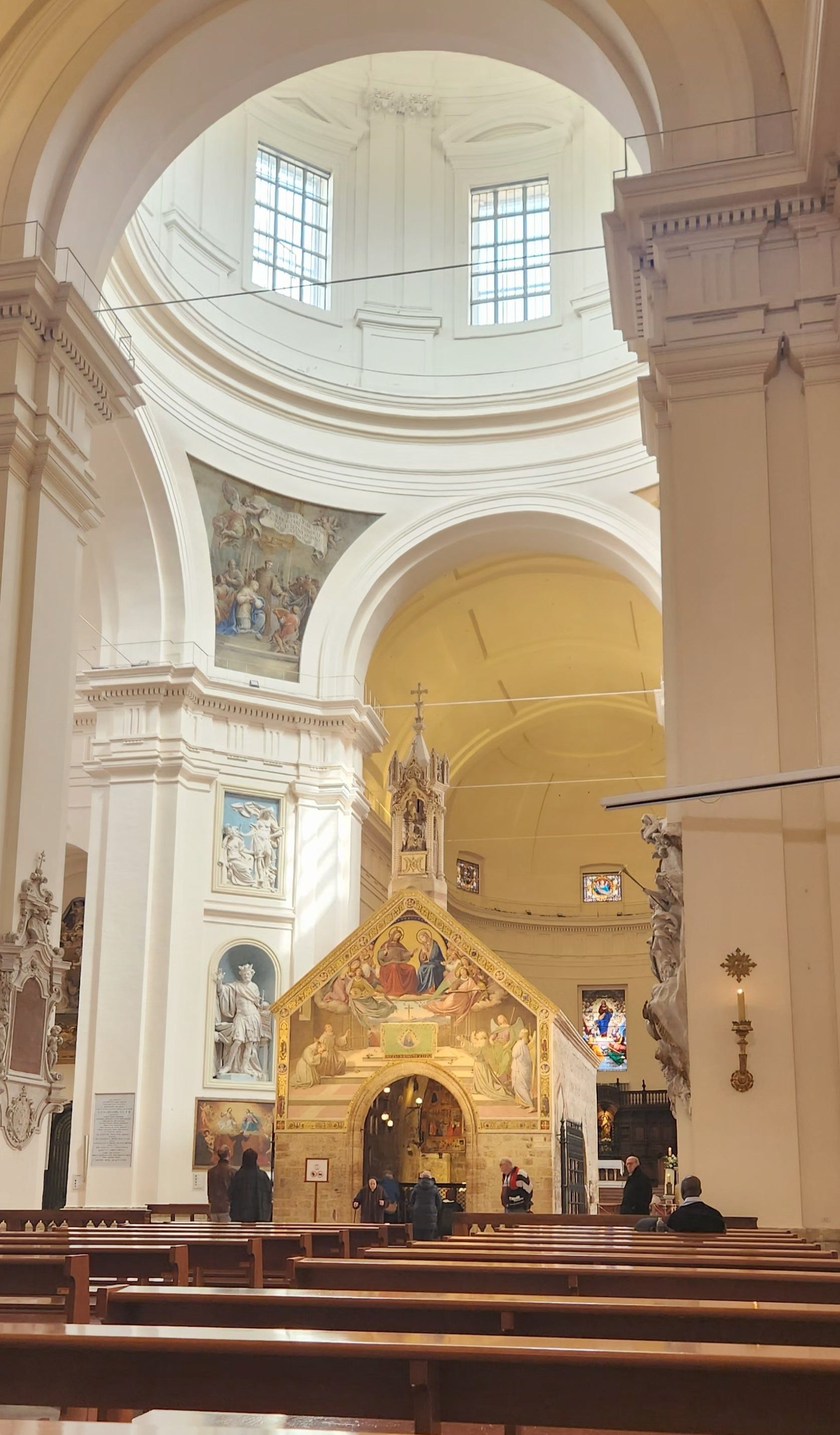
Cracks are openings. Not endings. If we let them, they pull us inward — toward the soul — so that what pushes back out is no longer the same. Francis knew this. The imprisonment, the revulsion, the cry at San Damiano — none of it was punishment. It was preparation. The tension of opposites, the absence that makes way for presence, the weakness that becomes the only honest form of strength.
 | A guest post by
|